
7th Edition of Global Conference on
Addiction Medicine, Behavioral Health and Psychiatry
October 19-21, 2026 | Boston, Massachusetts, USA
Behavioural Counselling
This strategy is founded on the idea that experience is the major source of learning. All conduct is learnt, according to the notion. Behavioural counselling and treatment are an action-based approach that employs the principles of learning to get rid of undesirable behaviours. The people act in the manner that their upbringing has conditioned them to. The purpose of behavioural counselling and psychotherapy is to assist the client with behaviour analysis, issue definition, and goal selection. For people who need therapy for any type of behaviour modification, such as addictions or phobias, this method is successful. Obsessive-compulsive disorder (OCD), PTSD, mood disorders, and anxiety disorders are a few examples. Behavioural counselling and treatment has four main components:
- Traditional Exercise
- Operational conditioning
- A social learning strategy
- Cognitive Behaviour Therapy
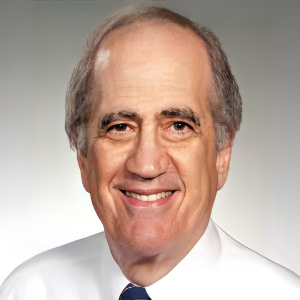
Frederick J Goldstein
Philadelphia College of Osteopathic Medicine, United States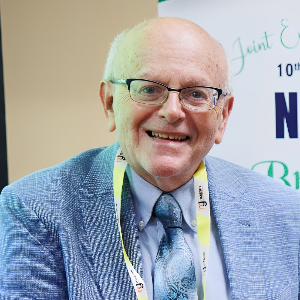
Nile Stanley
University of North Florida, United States
Ann Marie Leonard Zabel
Curry College and NEALAC Clinic , United States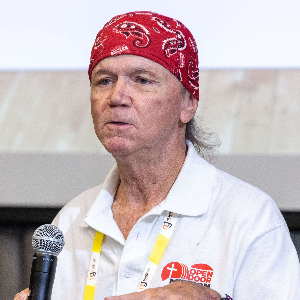
John Michael Weber
Trauma Healed Life Coach, United States
Denis Larrivee
University of Navarra, Spain
Steve Cohen
Medvesta Hypnosis Healthcare, United States
Andrew Drasen
A Vision of Hope Media, United StatesSubmit your abstract Today


Title : The storm within: Neuropsychological insights into dysregulation and substance use in the adolescent brain
Ann Marie Leonard Zabel, Curry College and NEALAC Clinic , United States
Title : The effect of Balint training on self-efficacy and empathy among medical students and the moderator role of personality traits and choice of specialty
Meni Koslowsky, Ariel University, Israel
Title : Sexualizing anxiety and anxiolytic sex: Misattribution of arousal
Sam Vaknin, Commonwealth Institute of Advanced Professional Studies, United Kingdom
Title : Dr Jekyll and Mr. Hyde revealed: Tales from the default mode network
Christopher Ashton, TeDDs on Chapel, Centre for Recovery, Canada
Title : Integrating bibliopoetry therapy and digital health technologies for inflammation management: A neuropsychosomatic perspective
Nile Stanley, University of North Florida, United States
Title : Addiction and the failure of meaning-forming
Jenni Guentcheva, GoodNeighbor LLC, United States